In a lucky flook, I came across this great lecture by Tom Sito on animating with live action sequences. I personally had never heard of him before seeing this video, but was completely blown away by his showreel and by the amount of knowledge he so clearly has.
What I liked best was his planning drawings for the main character sequence in Who Framed Roger Rabbit at the end, where he mapped out where every character would be and what action would take place at each camera movement, to ensure it didn't look flat. What an inspiration!
Animation and Live Action: Lecture Highlights with Tom Sito from Virtual Animators on Vimeo.
Thursday, 28 November 2013

Regular Show Animatic
As a huge fan of the cartoon Regular Show, when finding the animatic for one of their first episodes I was really excited to compare it the finished animation. Unsurprisingly they had mastered the timing, movement and content, which all looked near identical to the episode.
What I personally struggle with the most is keeping to the animatic/storyboard when editing, as I tend to edit with the footage I have and what looks best, whilst sticking mainly to the sequence in which the events happen.
What I personally struggle with the most is keeping to the animatic/storyboard when editing, as I tend to edit with the footage I have and what looks best, whilst sticking mainly to the sequence in which the events happen.
Temporary tattoo test
After deciding that a temporary tattoo pen would be best for the costume of my actor, I ordered one on Amazon and gave it a test.


I drew out one of the designs I had created and tried to replicate it as best as I could, given that the pen nib was a lot larger than expected. Saying this when scaling my designs up it worked well and was a lovely shade of blue which wasn't too bold and looked slightly washed out. It washed off quite easily but still left a slight marking for a few days, but nothing too noticeable (saying this, my skin is really sensitive to facepaint/pens/full make-up so I find it notably difficult to wash off). Overall I am happy with the outcome, and can't wait to see what it looks like as a full tattoo sleeve.
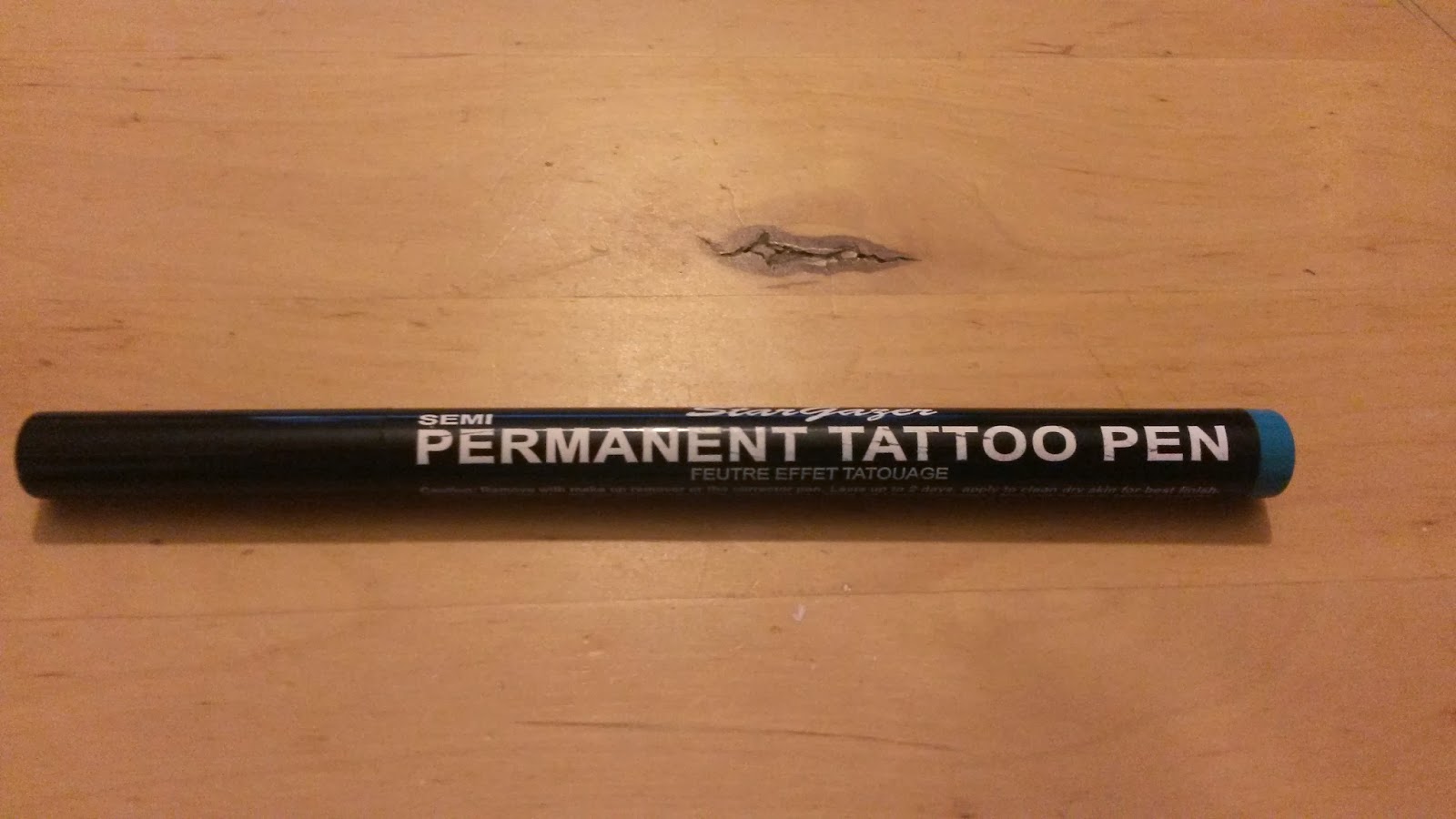

I drew out one of the designs I had created and tried to replicate it as best as I could, given that the pen nib was a lot larger than expected. Saying this when scaling my designs up it worked well and was a lovely shade of blue which wasn't too bold and looked slightly washed out. It washed off quite easily but still left a slight marking for a few days, but nothing too noticeable (saying this, my skin is really sensitive to facepaint/pens/full make-up so I find it notably difficult to wash off). Overall I am happy with the outcome, and can't wait to see what it looks like as a full tattoo sleeve.
Persopolis
One weekend I decided to watch the graphic novel turned animation, Persopolis. I had heard that the story was pretty dark but dealt with really beautifully and I couldn't wait to see what it actually was about.
Although very different in subject matter to my own film, there were some elements that I took away from watching it which linked directly to my own VFX practice. The main point was how they animated water. Much like the opening title sequence for 'The Series of Unfortunate Events', they used spiraling waves to give a more dramatic effect and stylized look. The style really stuck with me, and this is how I hope to portray my own waves.
Below is a short trailer for the film, including snippets of water animation.
After watching this film I was so inspired to animate and learn more on their process that I went in search for any behind the scenes info I could find. Luckily for me they created these small videos on the process and team which were really interesting. I couldn't believe that they had rendered each frame by hand in pen! I absolutely love that this was all created by hand yet looks so graphic. What I love more is the small things that show a hand has created it, such as the slight roughness the ink has given to each line. It is completely perfect in it's own imperfect way. Depending on the amount of time I have left in this module I would love to render sections of my animation in such a way.
Winnie the Pooh
I was concerned how to make my bear character cute and stylized yet still have believable, and found this really cute fan-art model of Winnie the Pooh which has been rigged and animated in a Pooh like walk. It was really interesting to see such a well known character in a different medium and personally I think it works well. What I like most about Winnie the Pooh is his distinguishable movement and personality in his walk, and I need to really work on this with my chracter.
Grizzly bears in 'The Living Edens: Kamchatka' documentary
The Living Edens: Kamchatka from MacQuarrie-Byrne Films on Vimeo.
This video has some gorgeous shots of grizzly bears, especially when fishing and playing in the water. Some great reference footage in here.
Industrial Light and Magic
When we first started this module I watched the documentary 'Creating the Impossible' which is about the beginnings of the first VFX company Industrial Light and Magic.
They were the founders of visual effects and still are the leading company in developing new software and improving the old software. They used matt paintings on glass and then composite film footage over the top, miniature models on blue screen, complex masks and costumes and optical compositing when they first started out making the first Star Wars.
They then led onto creating the Dyxtraflex computer allowing dynamic and repeatable camera moves, they developed computer graphics, made the first computer animation of the hand moving and first computer environment using Mac's software, they made the stained glass man character in the Young Sherlock Holmes in 1985 (was a lot of work as they didn't have the tools to do such things then) which was the first animated character ever made, they made the first morphing shot in the film Willow, the first digital editing system, the first digital audio editing system, a film laser scanner, The Pixar computer with a powerful graphics computer for digital compositing and RenderMan their software and they created the first digitally animated film. Phew!
After all of these massive advancements in technology, equipment and software the company split, which the other half then became the first 3D animation company Pixar. Lucas film then set up their own CG group which was to develop the medium but only for films, which led to them creating the film Abyss.
They carried on to break new ground always staying innovative and forward thinking. Jurassic Park was the biggest turning point for showing the possibilities of CG, whereas Forest Gump did the same but for understated hidden effects. During this time people felt threatened by the digital shift, and referred to it as 'the dark side' where they lost a lot of their employees due to reluctancy to change their way of working.
Their most recent developments is the creation of their own particle system and way to render that, mastering photorealistic modeling and effects using both hard surface with organic and advancing their mocap technology when filming the Pirates of the Caribbean franchise.
Below is a fantastic VFX breakdown of their blockbuster film The Avengers.
http://www.ilm.com/
Subscribe to:
Posts (Atom)